Between 2021 and 2025, the Calgary Census Metropolitan Area grew from approximately 1.54 million to 1.836 million residents – an increase of 19.2% in just four years.
According to Statistics Canada’s most recent subprovincial population estimates, international migration has been the primary driver of this expansion, with permanent immigration as the leading component.
This recent surge significantly outpaces the 2016–2021 period, during which 81,315 recent immigrants settled in the region.
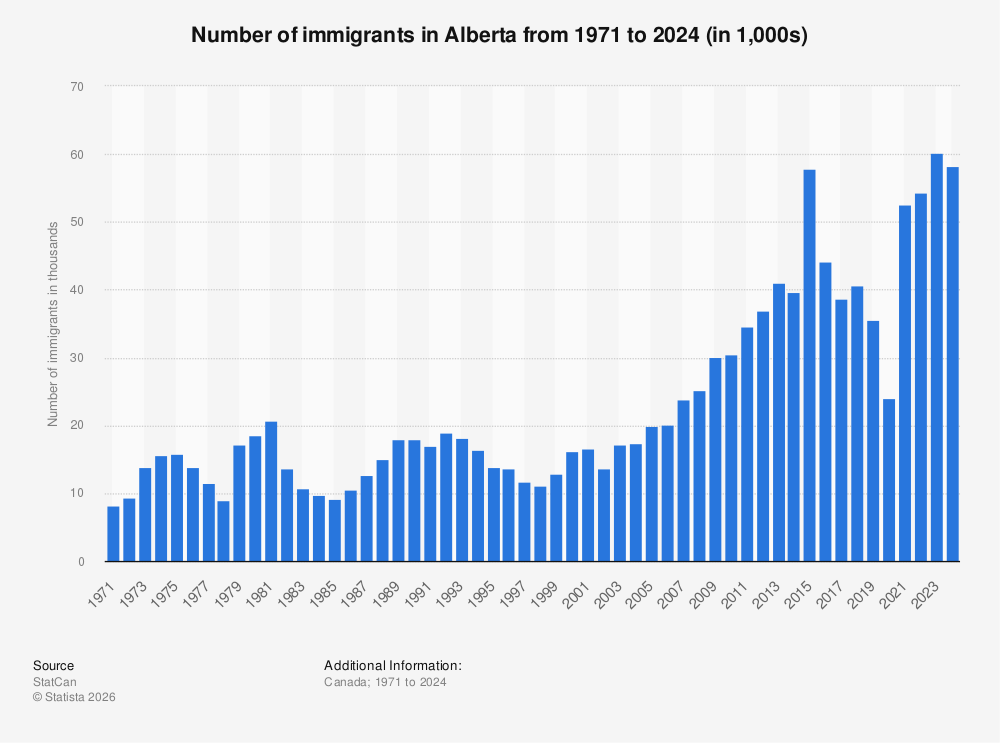
This accelerated growth reflects sustained high levels of permanent resident admissions to the Calgary CMA in the years following the 2021 Census. Combined with ongoing interprovincial inflows, these demographic shifts have rapidly altered the size and composition of the local population.
The pace of change has placed measurable pressure on housing, infrastructure, and public services.
Benchmark home prices rose sharply from 2021 levels and remain dramatically higher than pre-surge benchmarks, reducing affordability for many residents.
At the same time, school enrollment, healthcare capacity, and transportation networks have faced increased demand as the city works to expand services in line with population gains.
These developments have coincided with a rise in visible homelessness – the 2024 Point-in-Time Count identified 3,121 individuals experiencing homelessness, up from 2,782 in 2022.
Local reports also note heightened demand on policing and other municipal services during this period of rapid expansion.
Understanding these demographic trends is essential for effective long-term planning in Calgary and other fast-growing Canadian centres.
Stay informed on issues just like this, that affect the lives of Calgarians like you. Join our email list for free today: